
Main page
Talk
Read
View source
View history
Welcome to Wikipedia,
the free encyclopaedia that anyone can edit.
251,329 active editors–7,205,994 articles in English
From today’s featured article
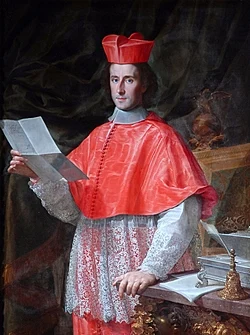
Pietro Ottoboni, the last cardinal-nephew
A cardinal-nephew is a cardinal elevated by a pope who is his relative. The practice of creating cardinal-nephews originated in the Middle Ages and reached its apex during the 16th and 17th centuries. It is central to the etymology of the word nepotism, which appeared in the English language circa 1670. A pope without a cardinal-nephew was the exception from the Avignon Papacy until Innocent XII banned the practice with his 1692 anti-nepotism papal bull Romanum decet Pontificem. From 1566 until 1692, a cardinal-nephew held the curial office of Superintendent of the Ecclesiastical State. The curial office as well as the institution of the cardinal-nephew declined as the power of the Cardinal Secretary of State increased and the temporal power of popes decreased in the 17th and 18th centuries. Notable cardinal-nephews include popes such as Julius II, as well as the saints Charles Borromeo and Guarinus of Palestrina. (Full article…)
Recently featured: Destiny’s child, Lyon-class battleship, Liberty Bell
Archive, By Email, More featured articles, About
Did you know …
- … that one of the earliest iron bridges in India (pictured) was assembled during the reign of Amjad Ali Shah?
- … that people in Los Angeles used a podiatry clinic’s sign for fortune-telling?
- … that Josiah Blanton scored the Marshall Islands national soccer team‘s first-ever goal?
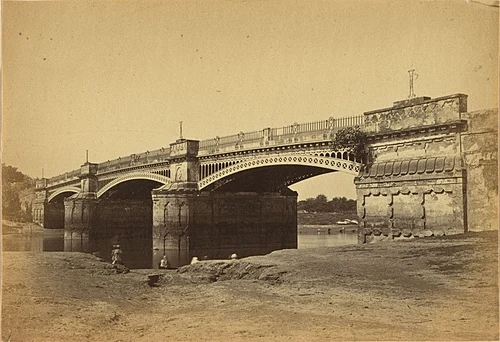
Iron Bridge, Lucknow
- … that services were suspended on the Inner West Light Rail for four months after cracks were discovered in the entire tram fleet?
- … that William Sirignano, while still a student, helped to solve an engine-instability problem on the Saturn V Moon rocket?
- … that The Moon on a Rainy Night was praised for addressing disability as a social concern rather than an individual one?
- … that Alice H. Lichtenstein‘s research contributed to a ban on trans fat in the United States?
- … that pole vaulter Armand Duplantis wrote the song “Bop” to cope with stress in the lead-up to the 2024 Summer Olympics?
- … that artist Cate Giordano once played both Henry VIII and his wife Anne of Cleves for a solo exhibition?
Archive, Start a new article, Nominate an article
In the news
- Keiko Fujimori (pictured) is elected President of Peru.
- The Catholic Church declares the Society of Saint Pius X to be in schism and excommunicates its members following a consecration dispute.
- Heatwaves affect Europe, leading to more than 5,600 deaths.
- Two earthquakes strike Venezuela, leaving more than 3,500 people dead and tens of thousands of others missing.

Keiko Fujimori
Ongoing: Ebola epidemic, FIFA World Cup, Flamingo Revolution, Iran war (Lebanon war), Russo-Ukrainian war (timeline)
Recent Deaths: Roger Vangheluwe, Julio Revuelta, Victoria Cruz, Phyllis Kinney, Thomas Fey, Humphrey Smith
More current events, Nominate an article
On this day
July 7
- 1777 – American Revolutionary War: British forces caught up with American troops withdrawing from Ticonderoga, capturing more than 200 men at the Battle of Hubbardton.
- 1898 – US president William McKinley signed the Newlands Resolution, annexing Hawaii as a territory of the United States.
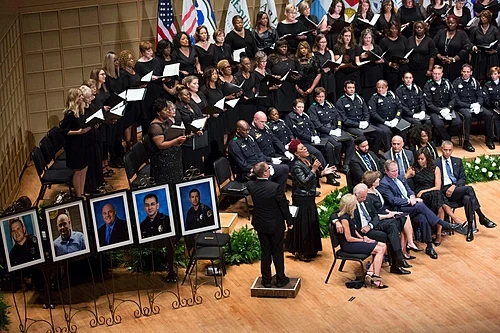
Memorial service for the shot Dallas police officers
- 1911 – Four countries signed the North Pacific Fur Seal Convention, which banned the hunting of seals in the pelagic zone.
- 1974 – West Germany won the FIFA World Cup final against the Netherlands at the Munich Olympiastadion.
- 2016 – A U.S. Army Reserve veteran ambushed and shot at police officers (memorial service pictured) in Dallas, killing five of them and injuring nine others, before being killed by a bomb attached to a police robot.
Fernande Sadler (b 1869), Henri Nestlé (d 1890), Maks Levin (b 1981)
More anniversaries:July 6, July 7, July 8
About, By Email, List of days of the year, About
Today’s featured picture
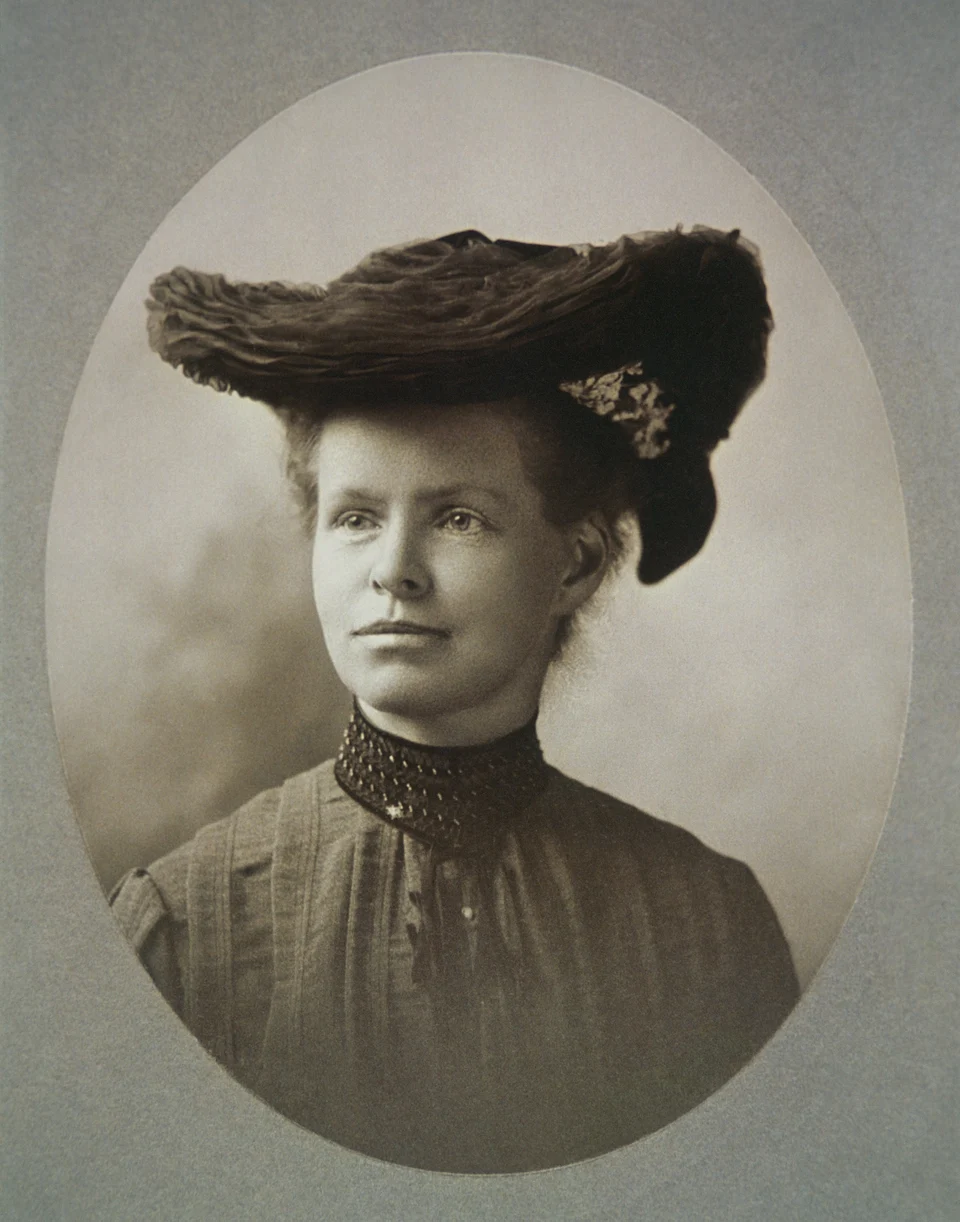
Nettie Stevens (July 7, 1861 – May 4, 1912) was an American geneticist who discovered sex chromosomes, which later became known as the X and Y chromosomes. Using observations of insect chromosomes, Stevens discovered that, in some species, chromosomes are different between the sexes and when chromosome segregation occurs in sperm formation; this difference leads to outcomes of female versus male progeny. Her discovery was the first time that observable differences of chromosomes could be linked to an observable difference in phenotype or physical attributes (i.e., whether an individual is male or female). Stevens was one of the first American women to be recognized for her contribution to science. Most of her research was completed at Bryn Mawr College, where she expanded the fields of genetics, cytology, and embryology. This photograph of Stevens was taken in the 1900s.
Photograph credit: Carnegie Institution of Washington; restored by Adam Cuerden
Recently featured: Silver certificate, Elephant, United States Declaration of Independance
Archive, More featured pictures
Other areas of wikipedia
- Community portal – The central hub for editors, with resources, links, tasks, and announcements.
- Village pump – Forum for discussions about Wikipedia itself, including policies and technical issues.
- Site news – Sources of news about Wikipedia and the broader Wikimedia movement.
- Teahouse – Ask basic questions about using or editing Wikipedia.
- Help desk – Ask questions about using or editing Wikipedia.
- Reference desk – Ask research questions about encyclopedic topics.
- Content portals – A unique way to navigate the encyclopedia.
Wikipedia’s sister project
Wikipedia is written by volunteer editors and hosted by the Wikimedia Foundation, a non-profit organization that also hosts a range of other volunteer projects:


 Wikidata-Free knowledge base
 Wikifunctions-Catalog of computer functions
 Wikiquote-Collection of quotations
 Wikisource-Free-content library
 Wikispecies-Directory of species
 Wikiversity-Free learning tools
 Wikivoyage-Free travel guide
 Wiktionary-Dictionary and thesaurus
Wikipedia languages
This Wikipedia is written in English. Many other Wikipedias are available; some of the largest are listed below.
1,000,000+ Articles
العربية , Deutsch , Español , فارسی , Français , Italiano , Nederlands , 日本語 , Polski , Português , Русский , Svenska , Українська , Tiếng Việt , 中文
250,000+ Articles
Bahasa Indonesia , Bahasa Melayu , Bân-lâm-gú , Български , Català , Čeština , Dansk , Eesti , Ελληνικά , Esperanto , Euskara , עברית , Հայերեն , 한국어 , Magyar , Norsk bokmål , Română , Simple English , Slovenčina , Srpski , Srpskohrvatski , Suomi , Türkçe , Oʻzbekcha
50,000+ Articles
Asturianu , Azərbaycanca , বাংলা , Bosanski , کوردی , Frysk , Gaeilge , Galego , Hrvatski , ქართული , Kurdî , Latviešu , Lietuvių , മലയാളം , Македонски , မြန်မာဘာသာ , Norsk nynorsk , ਪੰਜਾਬੀ , Shqip , Slovenščina , ไทย , తెలుగు , اردو